
Optimising Non-Transactable Restaurant Pages for 3.7 million users

Getting Started
Dining made easy
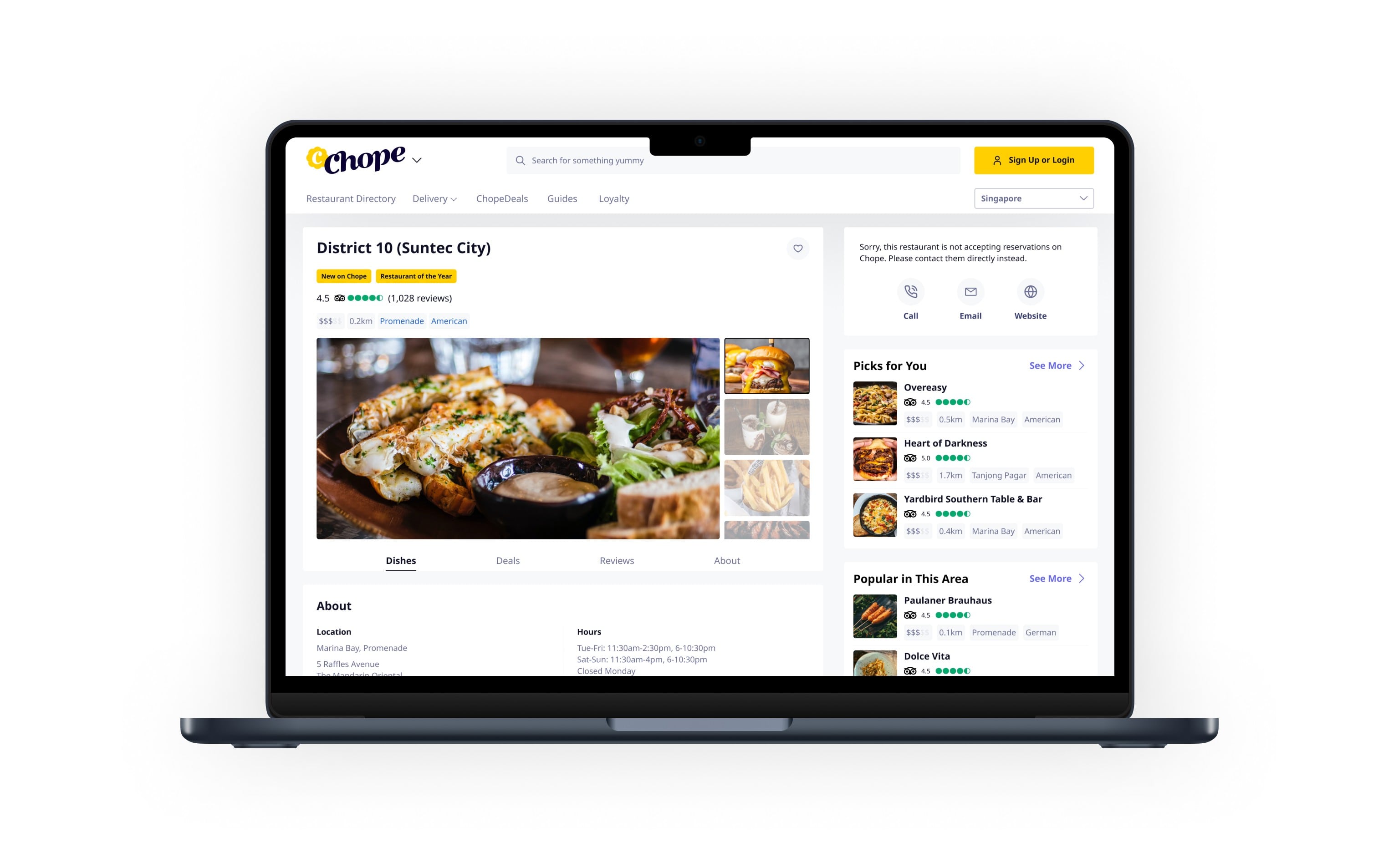
With Chope, diners can discover restaurants, make bookings, save money with deals, and earn points to redeem rewards. In 2022, the company served more than 3.7 million users across 5 markets in Singapore, Thailand, China, Hong Kong and Indonesia.
Context
At a glance
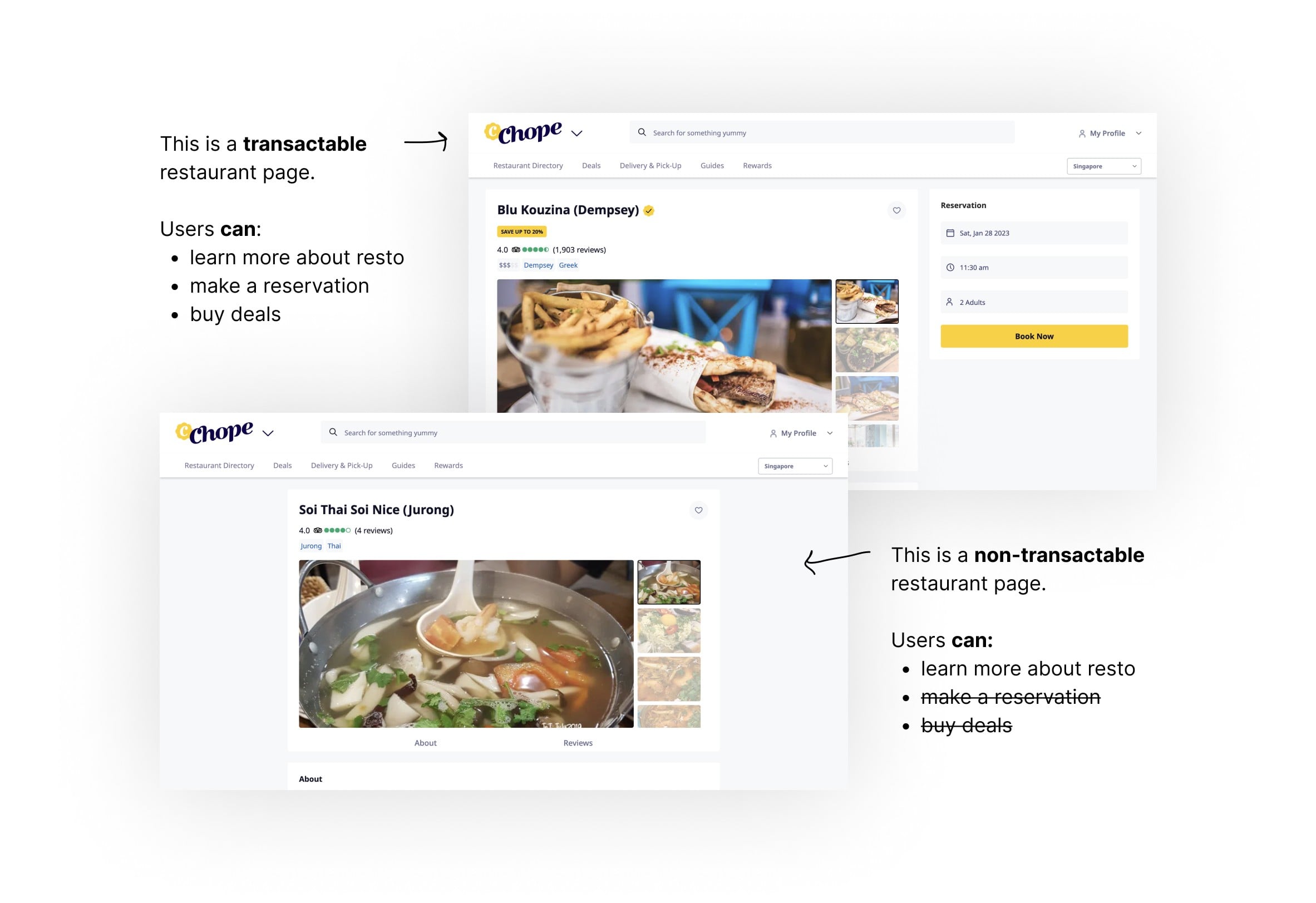
Chope is known to most people as purely a reservations platform. However, as Chope grew, we wanted to become the best food discovery platform in Southeast Asia. To be recognised for not just reservations, but for discovering places to eat. Much like how Spotify is known for discovering cool music. This meant that apart from listing only reservable restaurants and purchasable deals, non-reservable restaurants without deals (aka Non-Transactable Restaurants) would be listed too.
The Problem
What's the point of a Non-Transactable (NT) Restaurant Page?
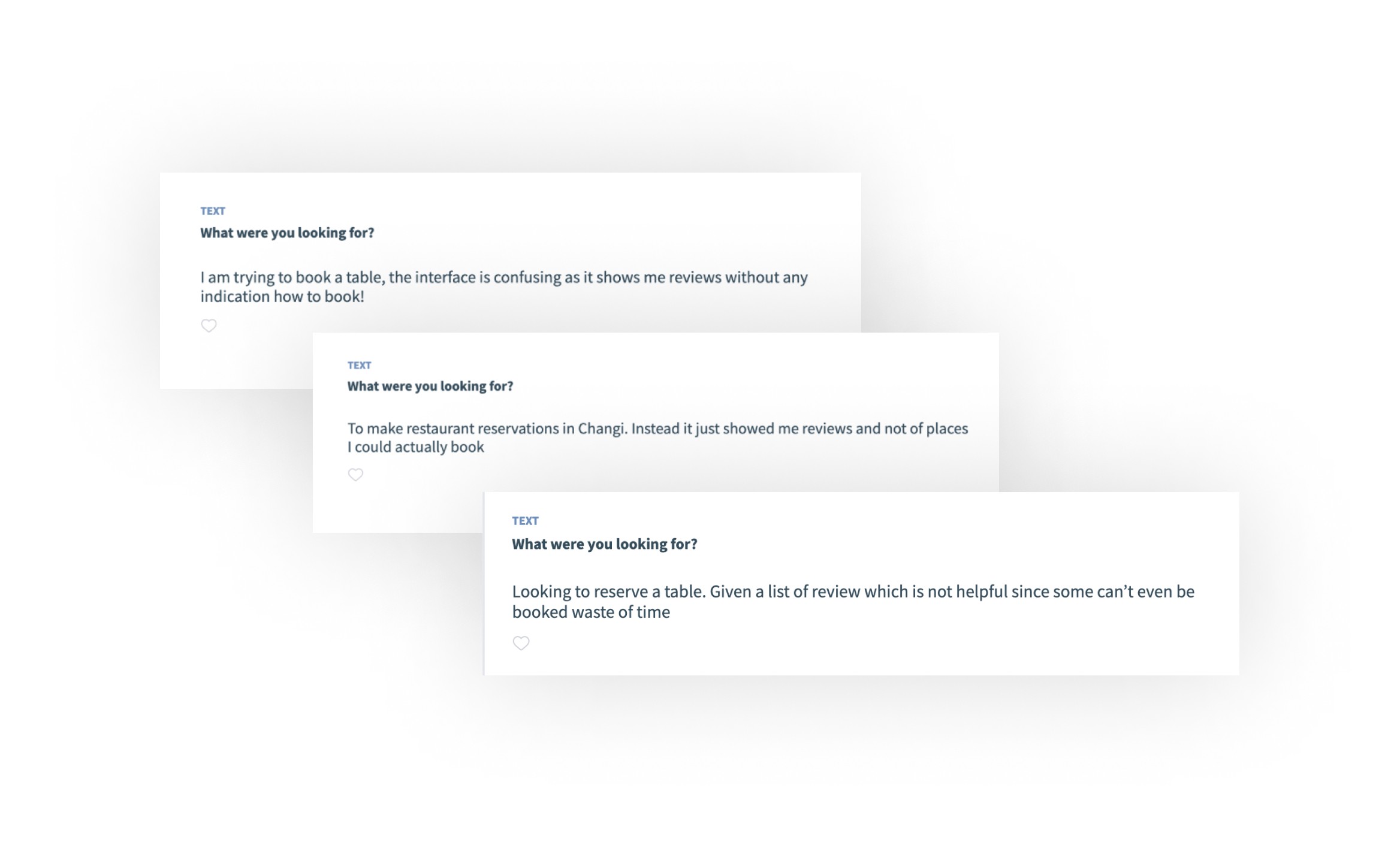
So we started listing NT restaurants. But users were confused, and incredibly frustrated. They dropped-off from Chope and we lost potential revenue. The problem became clear to my PM and I: HMW ensure that users continue their discovery journey on Chope?
Goals
Objectives
To bring the NT page to the next level, we focused on these 2 opportunities:
- Address users' frustration over the inability to reserve
- Provide relevant alternatives for users to explore
We hoped that helping users understand why they cannot make a reservation would build trust. With trust, we hypothesised that users would then be open to exploring other restaurants on Chope. To consider this project a success, we measured:
- Decrease in bounce rates
- Increased engagement rates
The Team
Who's behind it?
I led the design workstream for this project and worked with a brilliant group of cross-functional team mates, including:
My Role
Product Designer
Team
Terence Phua (Product Manager) Quy Dinh (Data Scientiest) Joey Gong (Tech Lead) Asi Zhang (Web Developer) Darren Chow (Product Marketing)
Timeline
Sep 2021 – Oct 2021
Understanding Our Users
What's their journey?
The food discovery process can originate from so many sources– a recommendation from a friend, a search on Google, an Instagram ad. I analysed survey results, conducted guerilla testing with internal users, and after brainstorming sessions, came up with a journey map to visualise the process of a user landing to leaving an NT page.
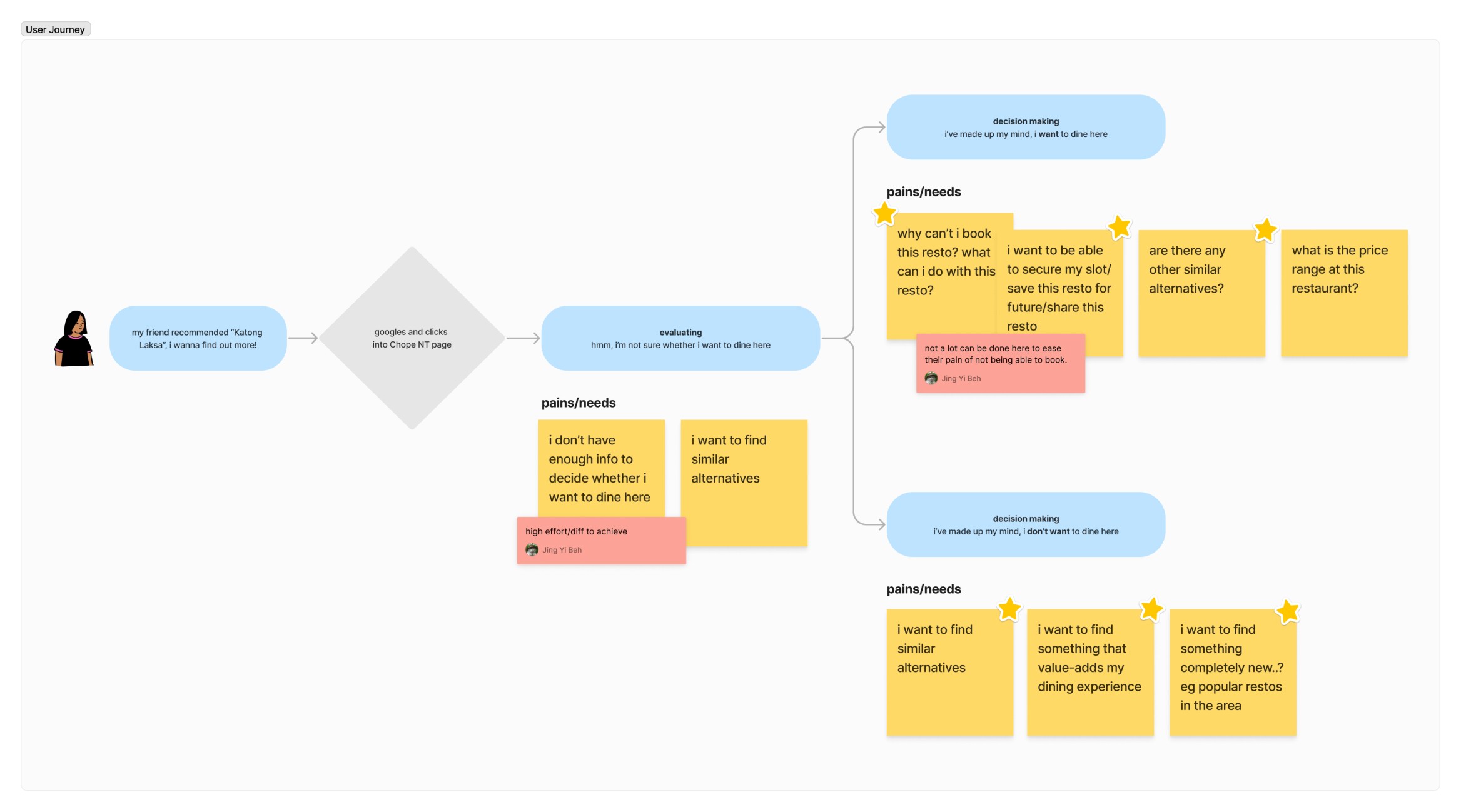
With this, map, I came together with my team and we prioritised the following pain point and opportunity:
Pain point– Why can't I make a reservation?
- Users tend to associate Chope with reservations. Some thought that not being able to reserve was a bug. Most were annoyed, and tried looking for other ways to reserve by going back to Google.
Opportunity– What else can I do?
- Provide users with alternative methods of making a reservation
- Recommend restaurants that are reservable
Ideation
What are our competitors doing?
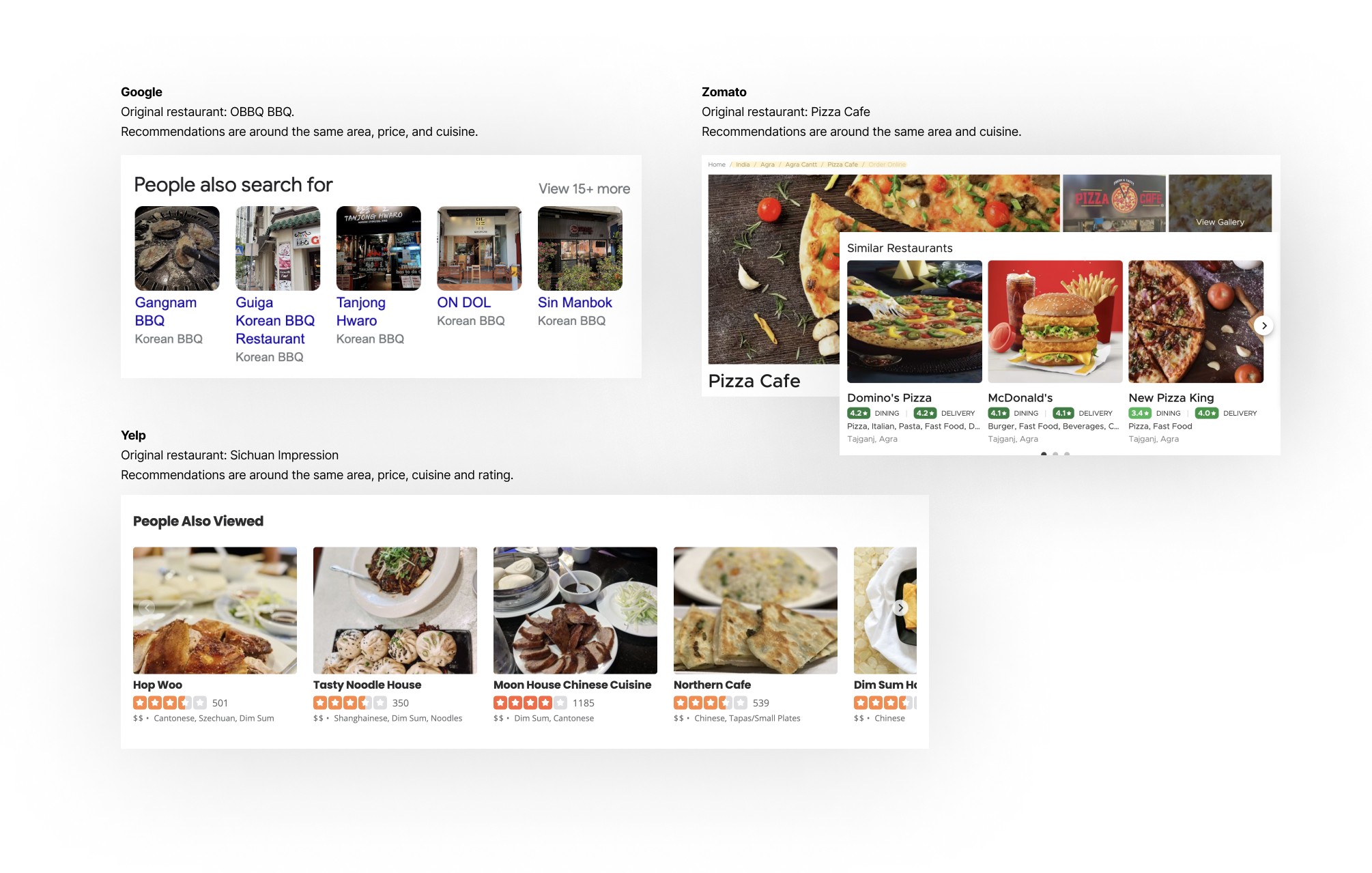
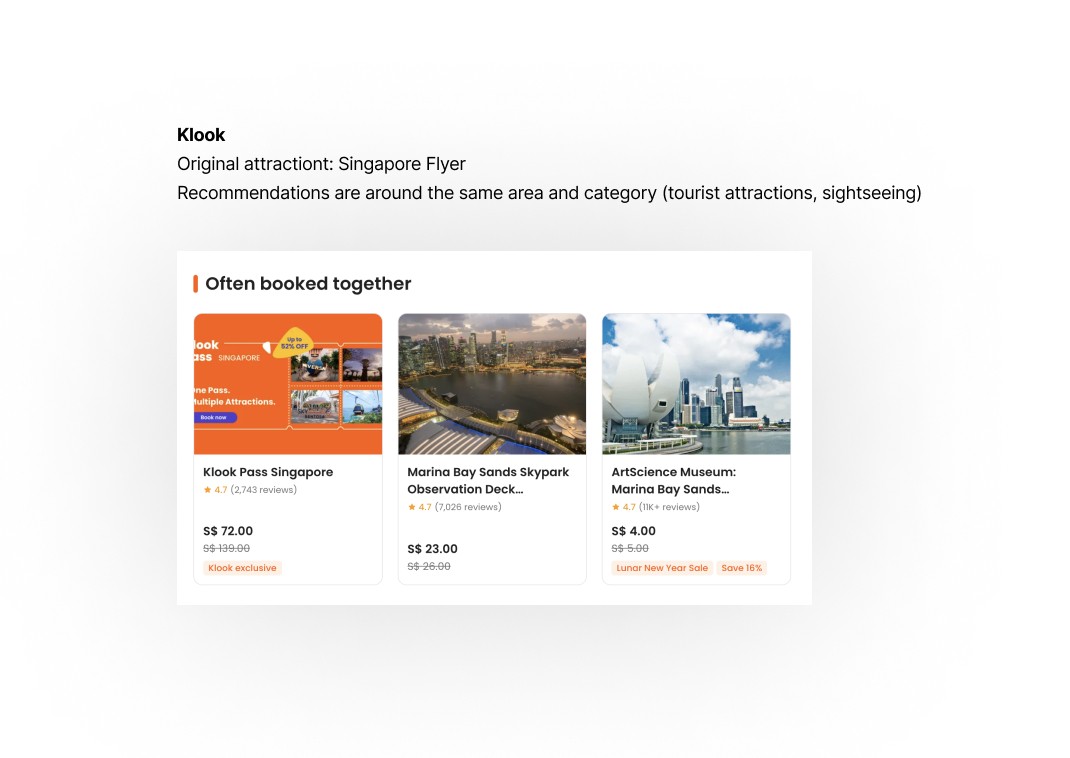
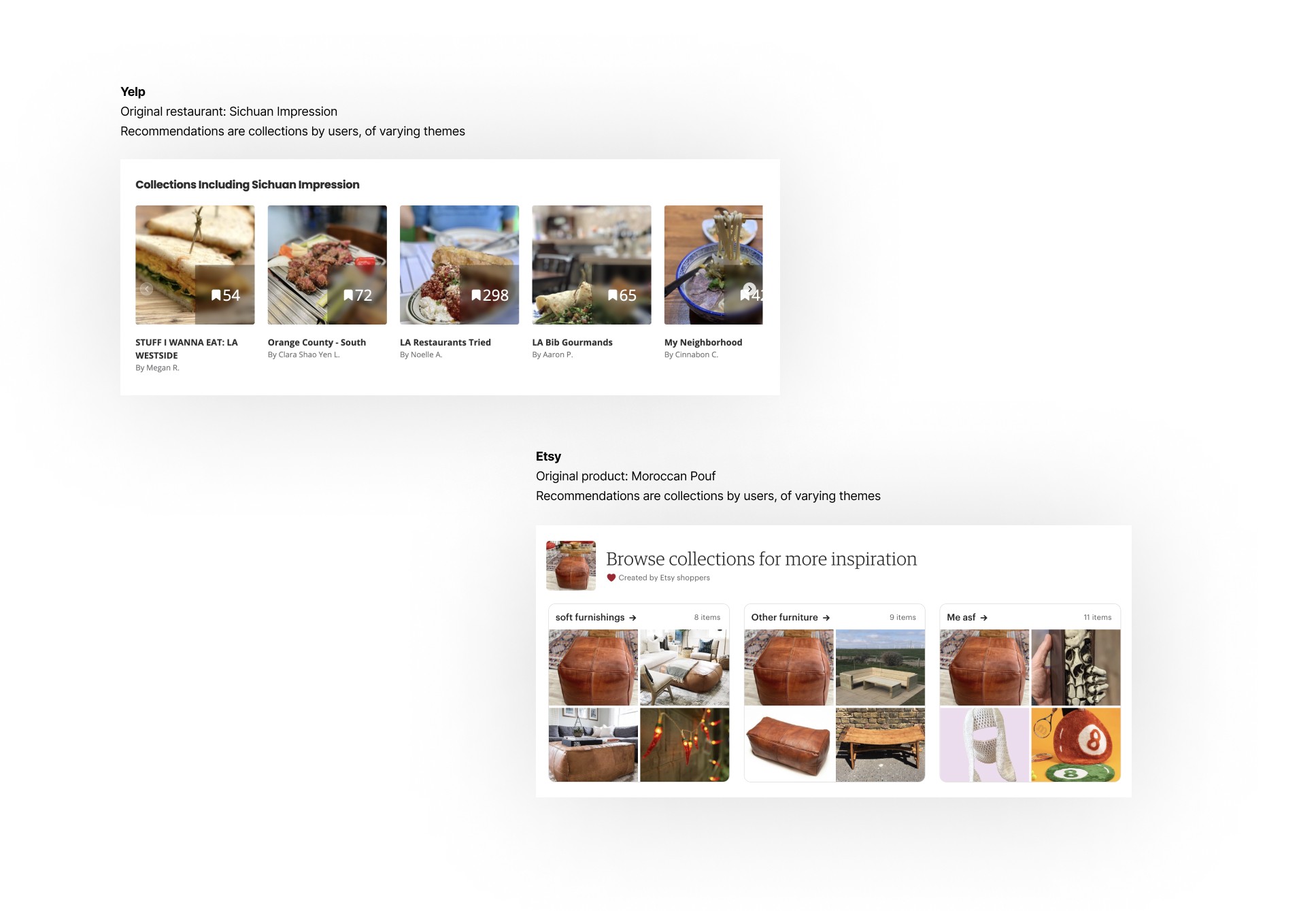
The next step was to look at big player not only within the food industry, but marketplaces in general. Google, Etsy, Carousell, Zomato were some that I benchmarked to learn how and what kind of recommendations were provided.
Insight 1:
Generally, restaurant recommendations are based on similarities in these categories: cuisine, location, and price. To make it easy for users to explore category-wide recommendations, provide obvious, accessible links.
Insight 2:
Complementary recommendations are a differentiator. Imagine if restaurants recommended dessert that's not only nearby, but pairs well with that the Steakhouse you just visited.
Insight 3:
Recommendations can come in collections on a thematic level. Apart from cuisine, location, and price categories, restaurants could be grouped by occasions/vibes such as Valentine's Day, Al-Fresco, etc.
Content proposal
Designing For Users
After rounds of discussions, we finalised the key contents of an NT page.
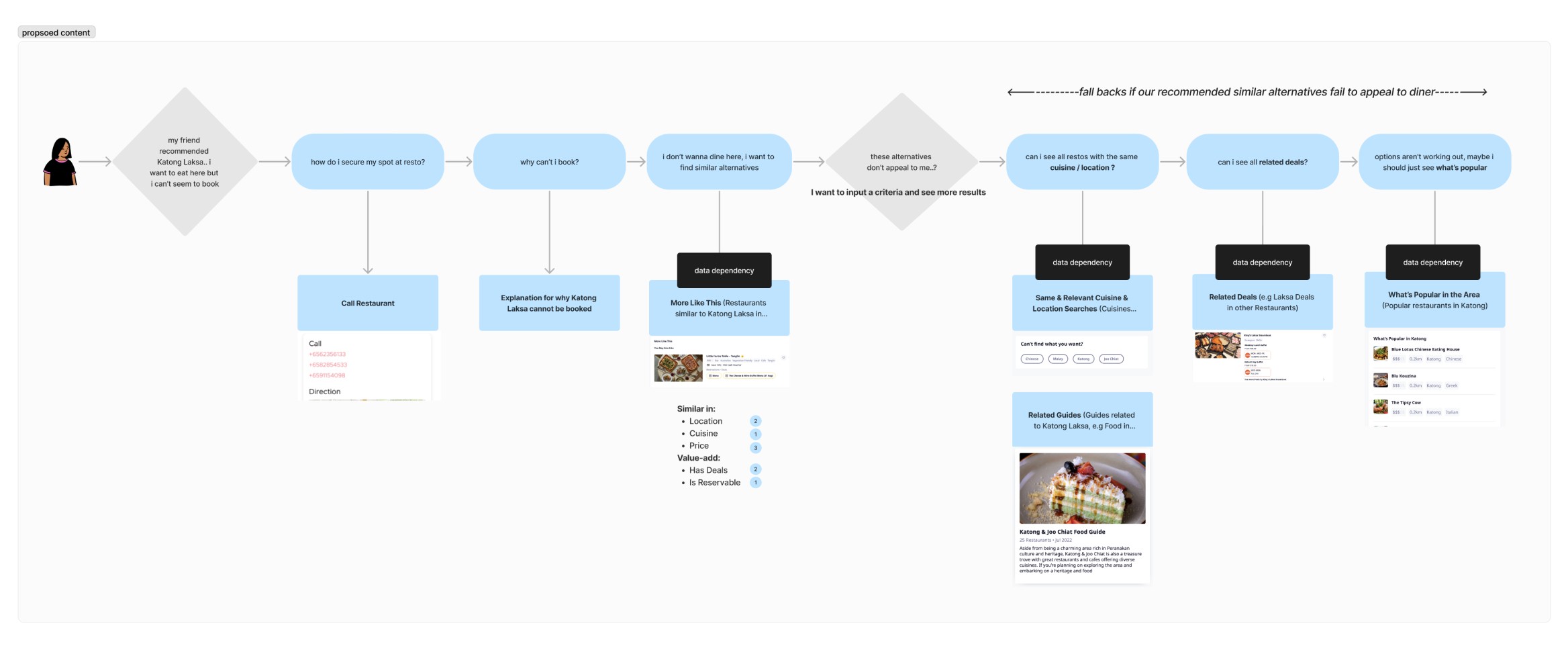
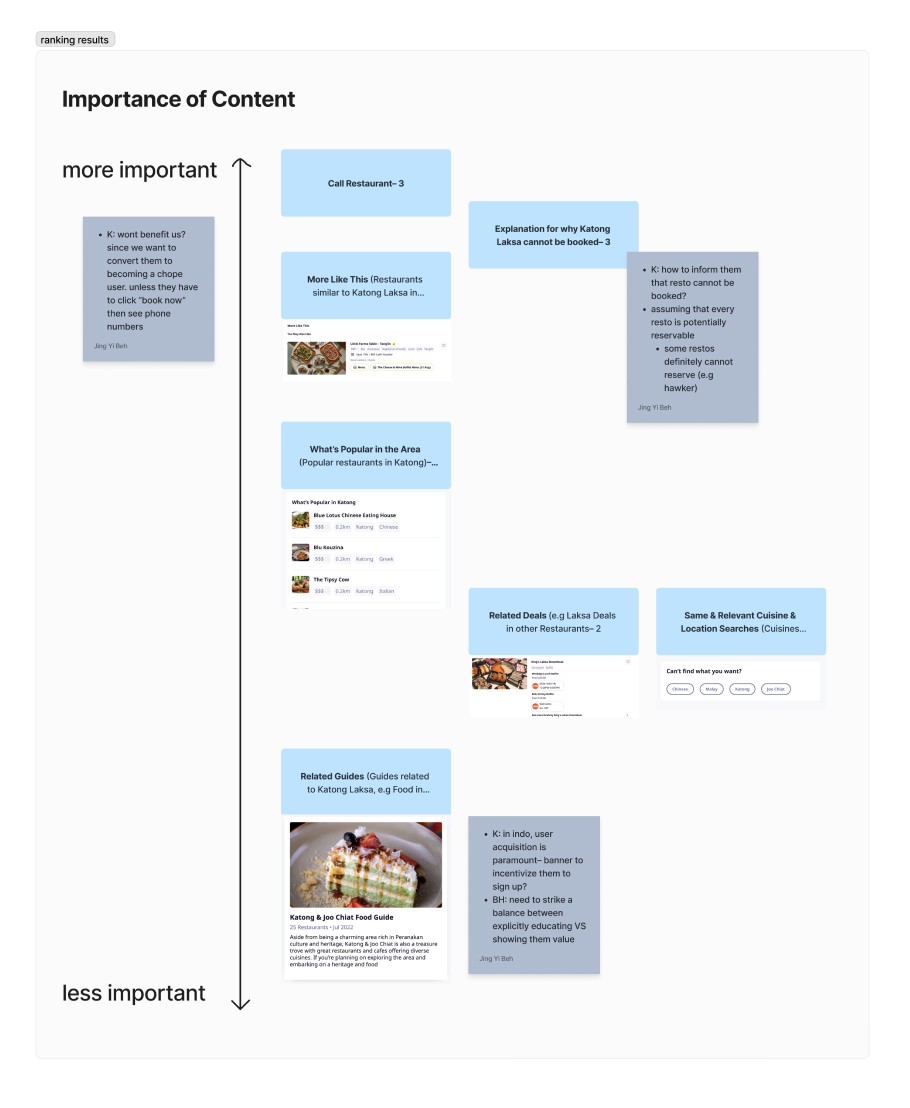
Then, to determine the relative importance of each content piece, the next step was to test them out with users. I spoke to 6 participants– users and non-users of Chope. They were given a scenario, and then asked to rank the content in terms of importance.
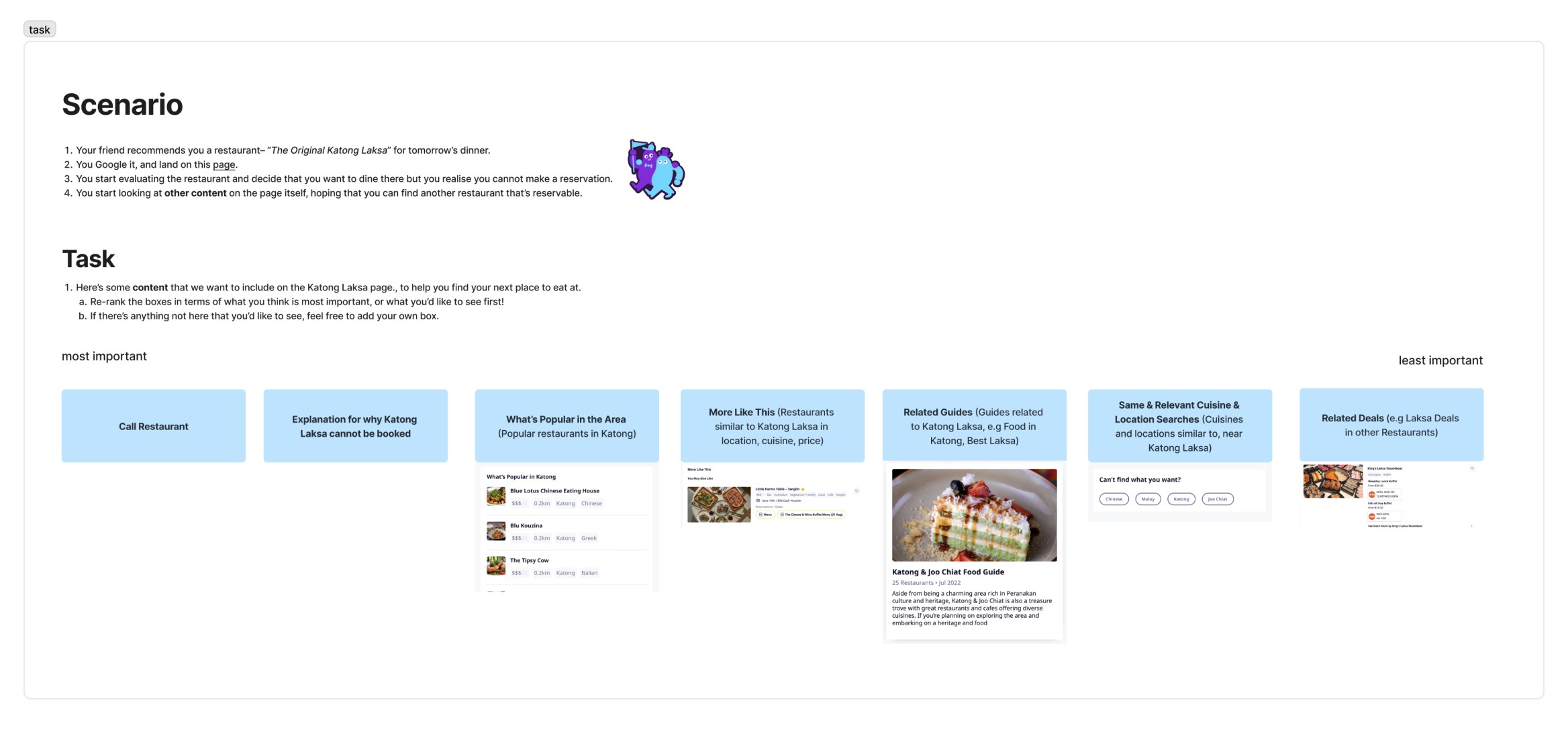
Here's the results that helped to shape the hierarchy of the NT page:
The Solution
Non-transactable as windows of opportunities
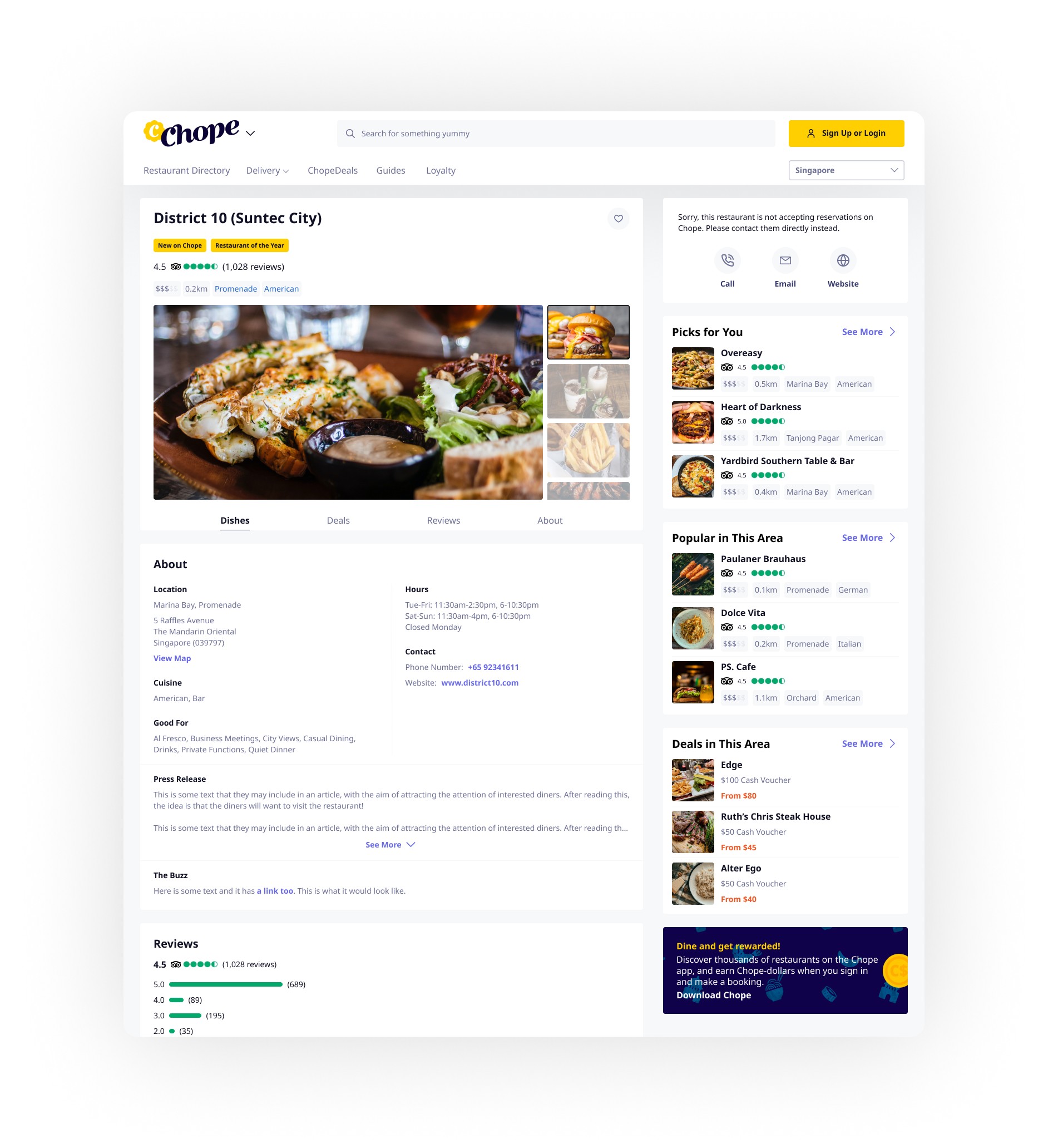
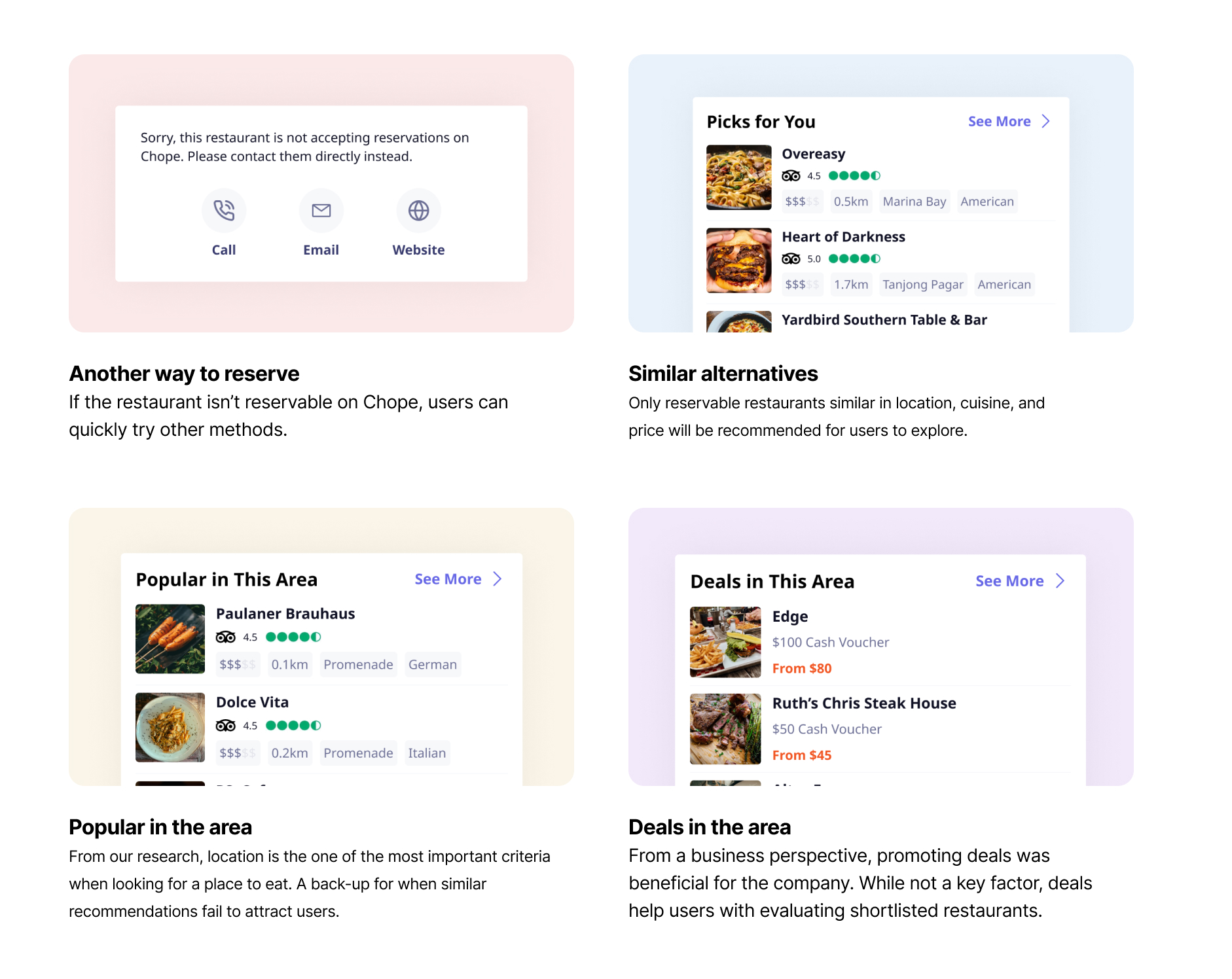
Our new non-transactable page surfaces what's most relevant– alternative methods of making a reservation, recommended restaurants, and deals nearby.
Key Changes
Post-Launch
Outcomes
- 10% decrease in bounce rate per session
- 12% increase in engagement per session
What I'd Do Differently
If I had more time, these are the changes I'd explore:
- Evaluate the entire Search experience (clicking into a search bar, receiving auto-complete suggestions, browsing search results). HMW signify to users that some restaurants are NT, before they even land on these pages?
- Consider how the same type of recommendations may be adapted for Transactable pages, in order to increase engagement
Learnings
- Check-in early– For this project, I was providing async updates each time key decision were made. Although it took up more time, stakeholders could provide feedback early and in their own time, resulting in a smoother and efficient working process.
- Talk to users– Even if the company might not have enough budget for research, there are always people to talk to, like friends and internal stakeholders. At times, learning from best practices online might be sufficient, but it's worthy to validate these learnings too.