
Account linking between Chope and The Club
Getting Started
Dining made easy
With Chope, diners can discover restaurants, make bookings, save with deals, and earn points to redeem rewards. In 2022, the company served more than 3.7 million users across 5 markets in Singapore, Thailand, China, Hong Kong and Indonesia.
Context
How did this project come about?
In an effort to expand their user base in Hong Kong, Chope signed a business agreement with The Club, a customer loyalty programme. This partnership meant that when members of The Club use Chope to make a reservation, they'll gain Chope Dollars and Clubpoints. To better understand the problems and priorities, my PM and I set out to talk to stakeholders.
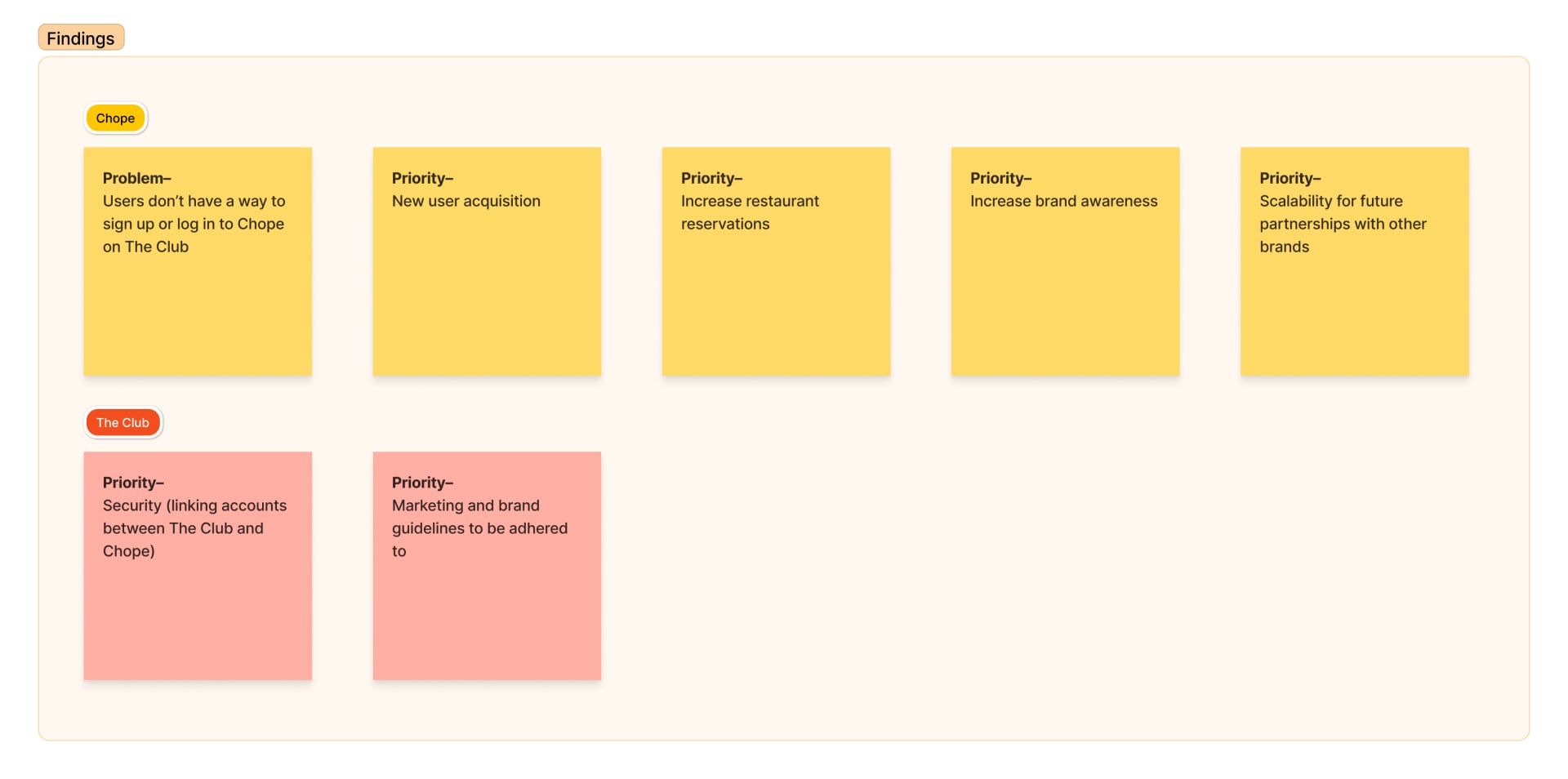
The Goal
Simplicity at its core
For account linking to be successful, users from The Club must first sign up for Chope. At its core, it seems like nothing more than connecting 2 accounts. However, this journey presented opportunities for us to introduce Chope and convince new users of Chope's value. It's widely known that one of the biggest determinators of churn is the first impression that platforms make during onboarding. Conversely, helping users understand Chope's value as efficiently and effectively would translate into longer-term user acquisition and retention rates. That's why, when designing for the account linking flow, we had these goals in mind:
- Make the process of account linking as easy and quick as possible
- Help users understand Chope's value as easy and quick as possible
My Role
Product Designer
Team
Wayne Tan (PM) Seven Li (Engineering Lead) Tina Lam (General Manager, Hong Kong) Connie Lau (Strategic Partnerships Manager, Hong Kong) The Club Product Team
Timeline
Oct 2022 - Nov 2022
Competitive Analysis
What does connecting accounts look like on other platforms?
This was the first time I was designing for account linking, so I started by understanding how other platforms designed for accounts linking.
%20(2).jpeg)
Insight 1:
Account linking begins most commonly on the Profile page. The assumption lies on the fact that account linking is associated with settings, and the settings page is often nested within profile.
Insight 2:
In the same account linking section, the benefits are often emphasised. If accounts are already linked, the value gained (e.g money saved, points earned) is emphasised.
Insight 3:
Providing users different ways of connecting their accounts (phone number, email, etc) saves them time.
User Research
Are my insights relevant?
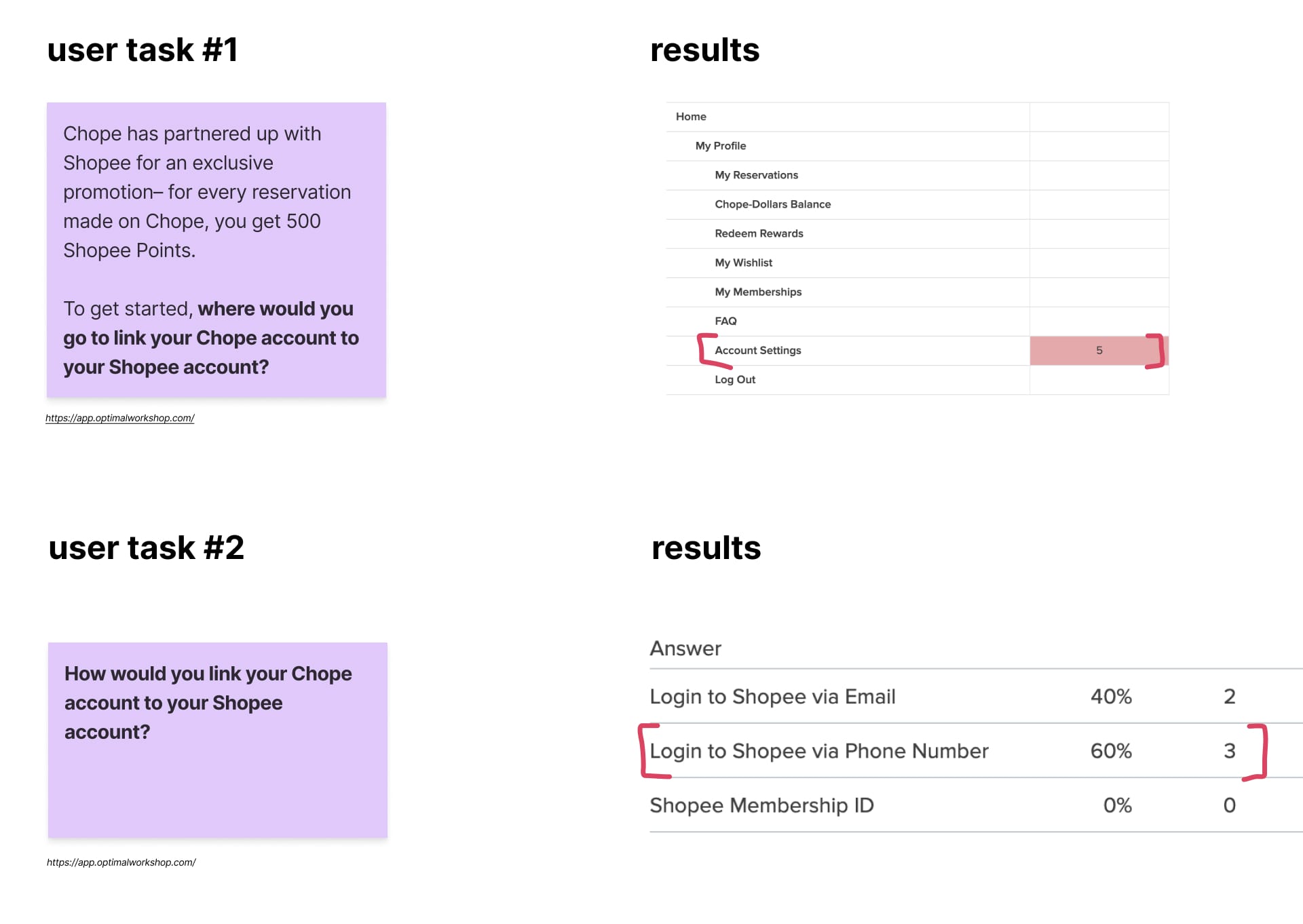
While my research gave me an understanding of best practices, I wanted to validate them with users. With Optimal Workshop, I used tree testing to find out where users would go to link their accounts, and a simple poll to find out what the most popular method of account linking was.
Ideation
Low-fi user flow proposal
Moving forward, I mapped out the proposed user flow and reviewed it with the rest of the stakeholders.
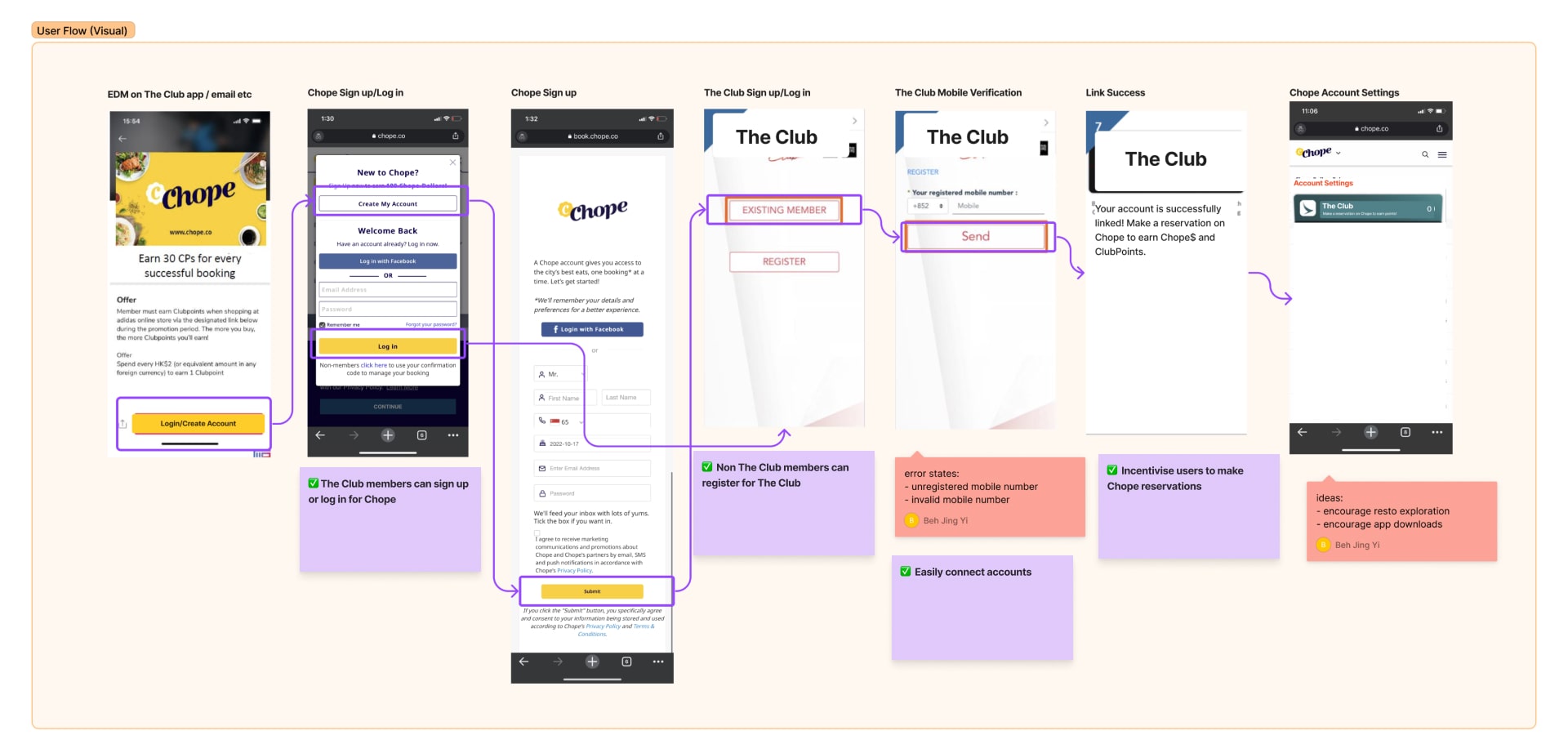
As with all projects, some concerns that stood out and eventually influenced the final solution were:
- Not all The Club accounts are linked to phone numbers, which meant that we had to explore less-popular options like The Club Membership ID, and The Club email.
- Business teams wanted to increase Chope app downloads, and requested that we enforce Chope app download to be a prerequisite for linking accounts
The Solution
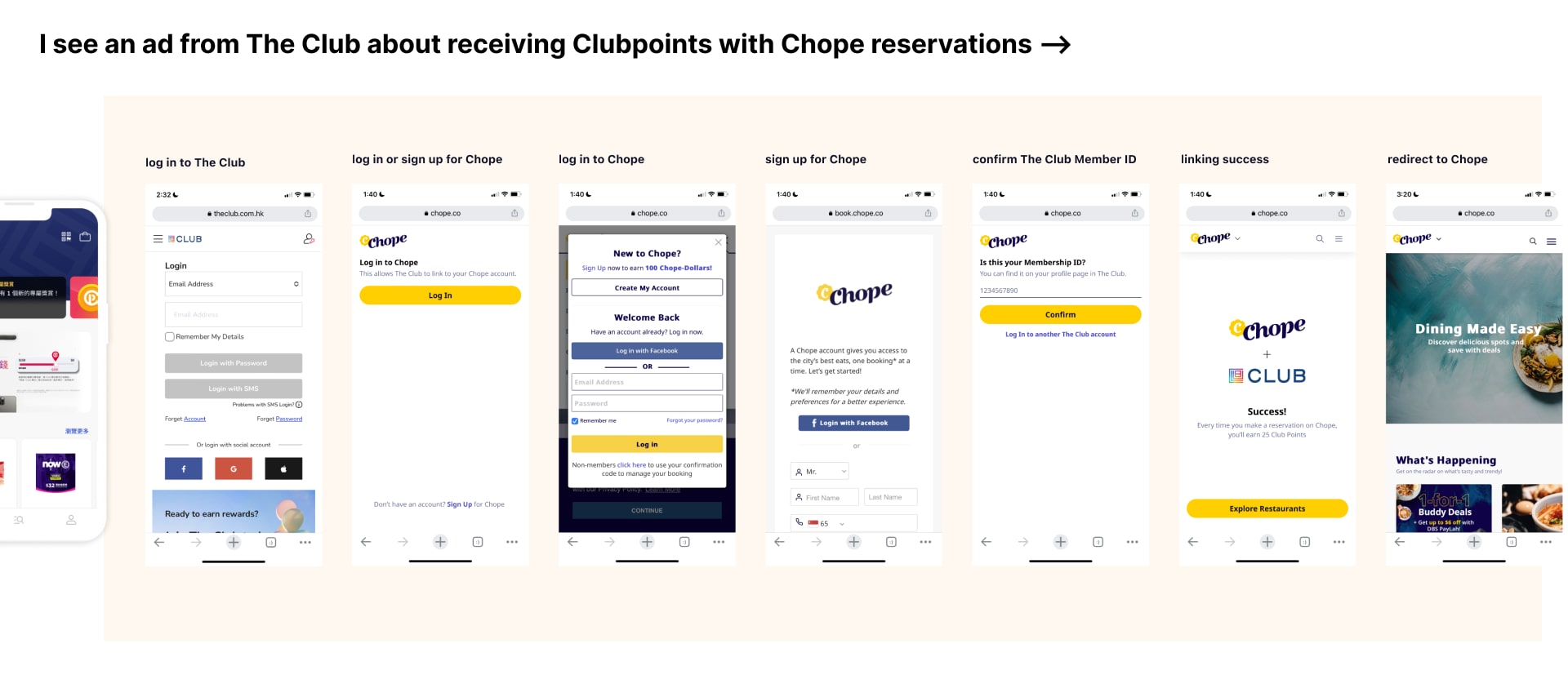
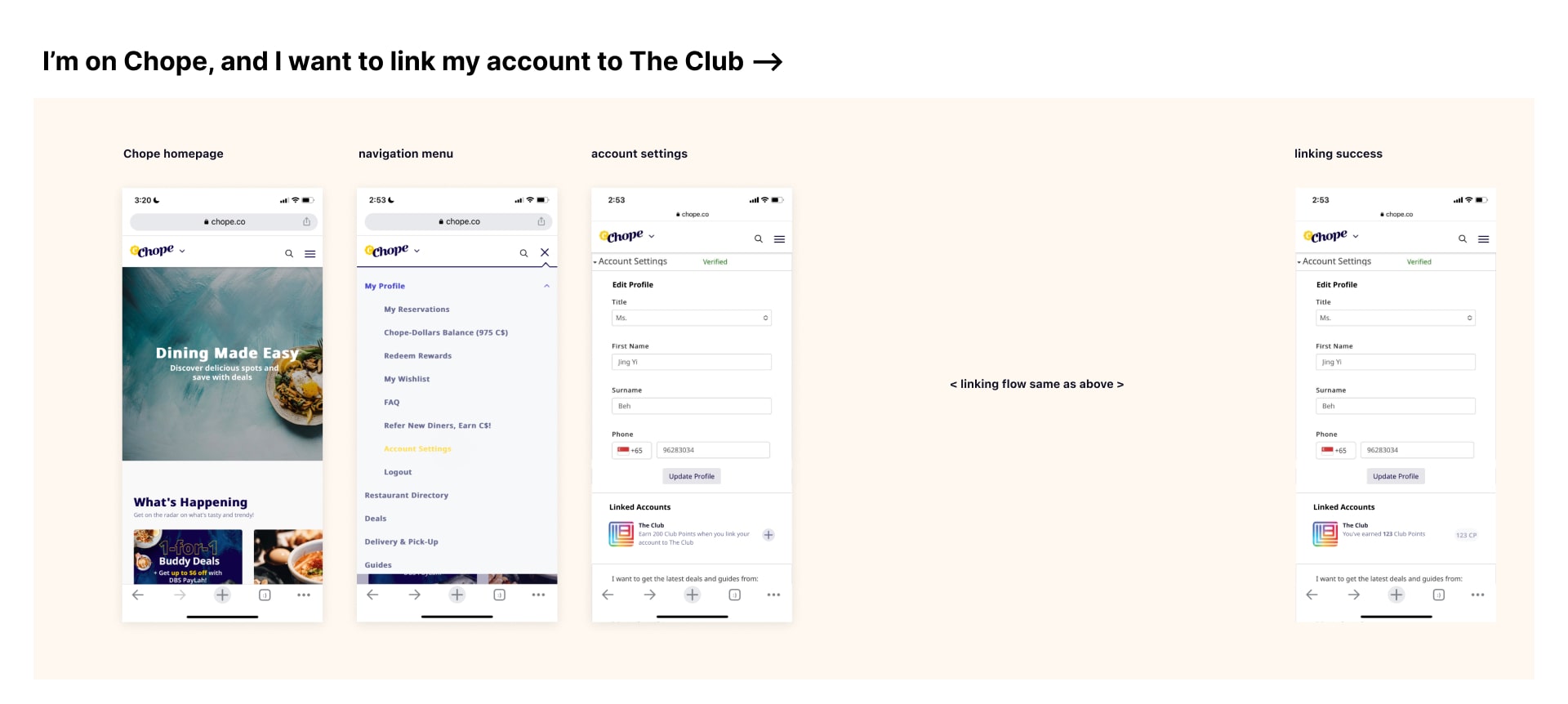
A breeze to link accounts
Post-Launch
What I'd do differently
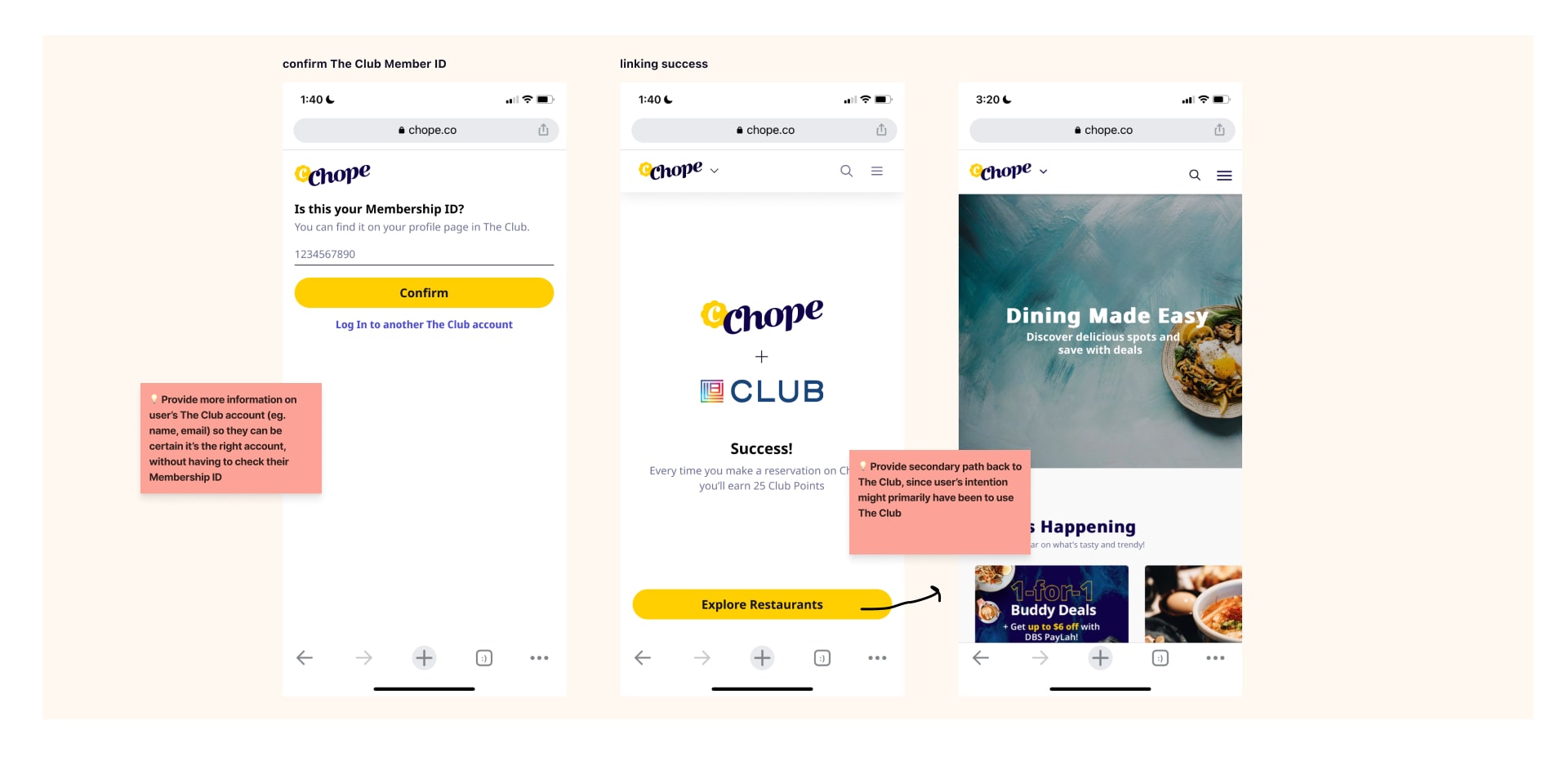
If I had more time, these are the changes I'd explore:
If I had more time
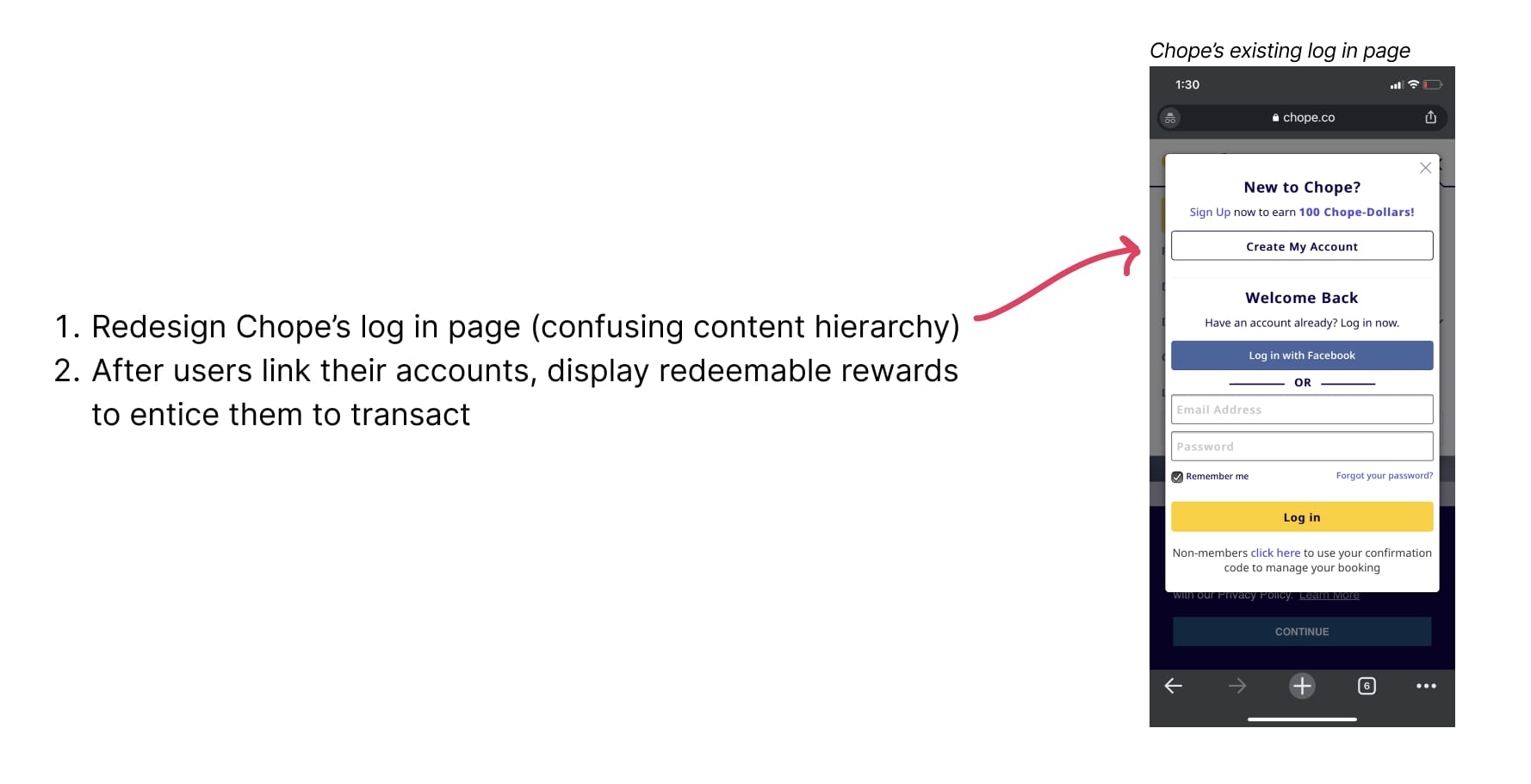
Additionally, there were several explorations I made but eventually did not make the cut due to technical constraints and business priorities. This includes:
Learnings
Compared to other projects, this project was more business-driven, and therefore involved greater stakeholder management.
- Facilitation– Design is more than just executing on and presenting screens– it involves negotiation to get people satisfied on the same page. Ensuring that everyone is
heard, using the right words, navigating requests while balancing technical + time constraints, user needs. - Documentation– Because more people from different teams were involved, information was lost or forgotten quickly. After some miscommunication occurred, I quickly took the initiative to document key discussions, decisions, and next steps. Documentation that’s easy to read, succinct, and accessible made the collaboration process smoother and more efficient.